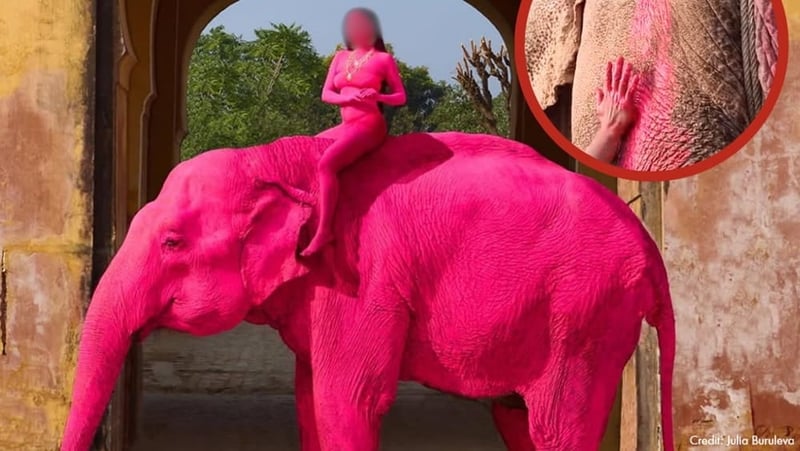
Viral pink elephant photoshoot in Jaipur under animal welfare investigation
News
A photoshoot of captive elephant painted bright pink called Chanchal in Jaipur, India has caused criticism across social media and resulted in an animal welfare investigation.
A photoshoot of captive elephant painted bright pink called Chanchal in Jaipur, India has caused criticism across social media.
The photographs were taken by Julia Buruleva in Rajasthan’s capital late last year, but resurfaced and went viral in March 2026, prompting fierce criticism over the ethical use of animals in artistic and tourism activities. It has been reported that Chanchal the elephant, who was approaching 70 years of age, has since died.
Animal advocates and members of the public have questioned whether Chanchal the elephant was subjected to unnecessary stress and exploitation, regardless of claims that non‑toxic colour paint was used.
Indian authorities launch investigation into elephant welfare standards
The Rajasthan Forest Department has confirmed that it is examining the circumstances surrounding the photoshoot, including whether appropriate permissions were obtained and if animal welfare regulations were followed.
Authorities are also reviewing whether existing laws governing the use of captive elephants were breached. In India, elephants are protected under the Wildlife Protection Act, and the breeding and exploitation in tourism of them remains a highly scrutinised issue.
Jaipur pink elephant photographer defends "creative choices"
The photographer behind the images, Julia Buruleva, has defended the shoot, stating that the colour used was organic, washable, and similar to powders traditionally applied during festivals. They also claimed the elephant was not harmed and that the session was short and supervised by the animal’s handler.
According to the elephant’s owner, Chanchal the elephant was no longer used for tourist rides and died earlier this year due to old age. They have maintained that the photoshoot did not cause distress or injury.
Elephant painting is a common activity promoted by exploitative tourism companies, in which elephants are used as canvases by tourists. Photoshoots like this further encourage the public to partake in experiences that can cause the animals physical and mental harm.
Calls for an end to Jaipur’s elephant exploitation
The controversy has reignited long‑standing concerns about the treatment of captive elephants in Jaipur and other tourist centres across India.
Social commenters have questioned why digital tools or AI post‑production techniques were not used instead of involving a live animal.
Normalising such practices on social media risks encouraging copycat behaviour, especially in tourist hotspots where animals are already vulnerable to exploitation.
FAQs
Is elephant riding at Amer Fort ethical?
India’s Amer Fort attracts thousands of tourists every year and almost 100 elephants who are forced to carry tourists up and down the steep paved floors.
Young elephants suffer an extremely cruel and intensive breaking-in process to make them submissive enough to give rides. The use of pointed metal bull hooks on the elephants, as well as wooden battens and whips causes severe pain.
Are elephants at Amer Fort treated well?
Most elephants at Amer Fort suffer health problems including issues with their foot pads, abscessed eyes and severe wounds from the seat on their backs.
Each elephant completes the hot and unpleasant journey up to the fort multiple times a day, carrying numerous passengers. They are controlled using bull hooks and live in severely inadequate conditions.
Are there alternatives to elephant riding at Amer Fort?
Yes you can walk or take a jeep up to the historic fort.
Elephant attractions across Asia, like rides up Amer Fort, only continue because of tourist demand. If we can end the demand, we can end the cruelty.
If you want to see elephants on your holiday, always choose to see wildlife in the wild, from a safe distance. If that’s not possible, there are a handful of responsible venues which provide sanctuary to animals who cannot be released into the wild.
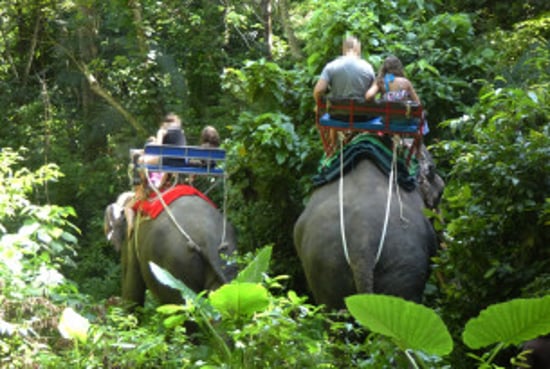
Don't get taken for a ride
Pledge to stop the abuse suffered by elephants used for entertainment.
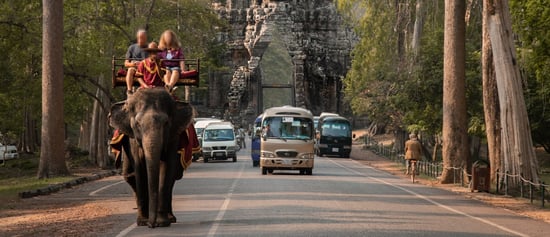
Elephant rides
Today, more than 3,000 elephants are being used and abused to entertain tourists and visitors across Asia.