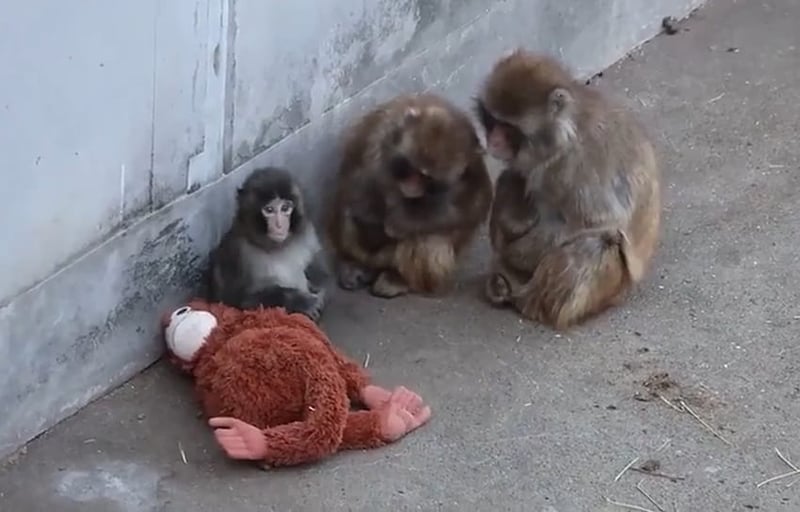
Punch the monkey in Japan draws attention to captive primate welfare
News
A young Japanese macaque named Punch has become an unexpected global symbol of captive loneliness and resilience. He also highlights the emotional welfare needs of captive primates and the vital role of rehabilitation and family reunification programmes.
After being rejected by his mother at Ichikawa City Zoo in Japan, Punch began carrying a stuffed orangutan toy everywhere for comfort.
Footage of the small macaque clinging to his soft toy has reached millions, with social media users expressing sympathy and frustration as they watched him try to integrate into the troop.
Punch’s story has pulled at heartstrings because it reflects something deeper. The need for connection.
Infant macaques are born entirely dependent on their mothers. When that bond is broken, the consequences can be long lasting.
What Punch's story reminds us about captive primates
Punch’s viral presence has opened a rare window into the emotional lives of primates.
While Punch's story has brought out the empathy in others, it should also incite action.
Every lonely monkey, whether in a zoo, a private home, or in the wildlife trade pipeline, reflects a system that treats intelligent social beings as commodities.
Viral moments like this can help people better understand what life in captivity can mean for highly social species like macaques and other primates.
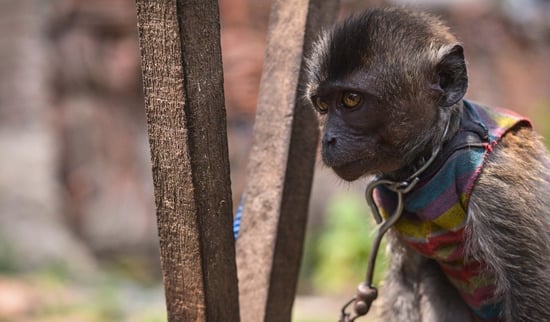
Monkeys in entertainment
Monkeys are cruelly trained and forced to ‘dance’ in the barbaric ‘Dancing Monkeys’ trade in Indonesia.
Why Punch the monkeys story extends beyond one zoo
Although Punch’s circumstances are specific to his birth and early rejection, his shines a light on a broader issue.
Across Asia, macaques are commonly kept in captivity for entertainment, as pets, or are confiscated from the wildlife trade networks.
Many have been separated from their families, raised in isolation, or deprived of the social structures they rely on to develop properly.
Monkeys are deeply social animals. Their emotional wellbeing is tied to their relationships, their troop dynamics, and the constant presence of companions. Isolation can lead to stress, abnormal behaviours, difficulty integrating, and long-term psychological harm.
Punch’s reliance on a cuddly toy is heartbreaking. It's a reaction to the absence of what should have been there from the start: family, safety, and social learning.
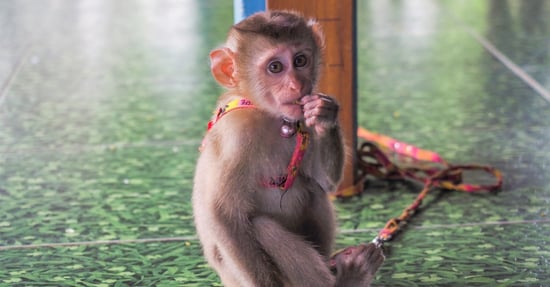
The cruelty behind social media videos
Macaque monkeys are bathed, dressed, and ‘rescued’ for social media content. Unfortunately, behind these supposedly cute videos, is a sad story of monkey abuse.
The role of primate rehabilitation and family reunification
The work of organisations like our partners, Jakarta Animal Aid Network (JAAN) becomes vital for captive monkeys in situations like this.
JAAN’s primate rehabilitation programme focuses on long-term recovery, social rebuilding, and, wherever possible, family reunification and release.
Macaques that arrive at JAAN facilities often come from traumatic backgrounds. Many were kept alone in small cages, chained, used as performers, or taken from poachers before they can learn essential survival behaviours.
Monkeys are introduced gradually to other individuals. Affection, grooming, conflict resolution, and troop bonding are encouraged in controlled, naturalistic environments. This rehabilitation goes deeper than just enrichment.
These social interactions form the foundation for potential release back into the wild or, when release is impossible, lifelong sanctuary living with stable social groups.
Getting macaques back into family structures is one of the most important steps in their recovery. It gives them what captivity took away.
By supporting programmes that rescue, rehabilitate, and reunite macaques, we can move toward a world where animals like Punch aren’t captive for entertainment, pets or wildlife trade.
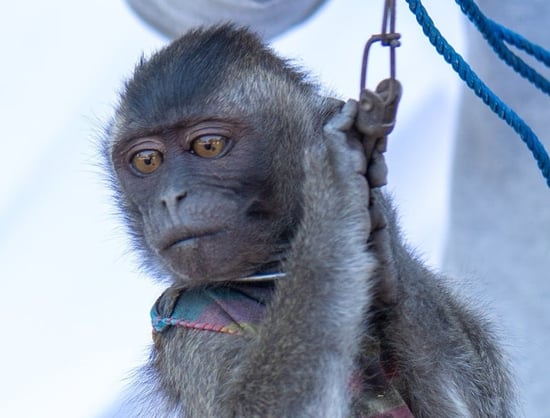
Help rehabilitate and release monkeys
Will you please help rehabilitate 31 traumatised monkeys who were exploited in the ‘Topeng Monyet’ trade for human amusement?
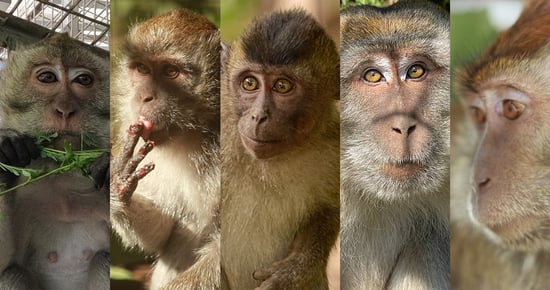
Which rescued monkey are you?
Are you a calm and confident Jono or a curious explorer like Amel? Take this quiz to find your personality twin!
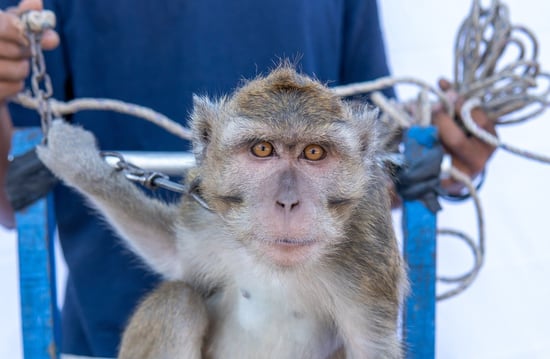
31 macaques rescued from monkey training centre
With your support, 31 monkeys were successfully rescued, making a significant leap to end the brutal ‘Dancing Monkeys’ trade for good.