Help free three orangutans trapped at Bakas Adventure Park in Bali
News
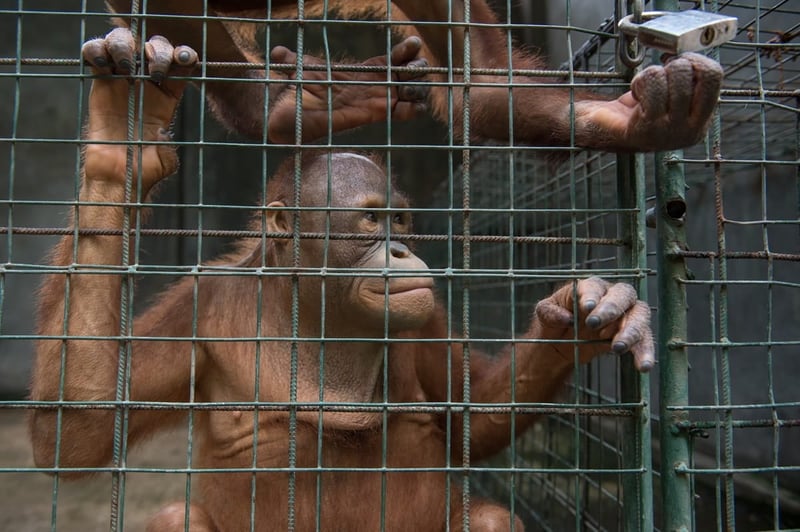
Three orangutans are suffering in captivity at Bakas Adventure Park in Bali. You can help free them by sharing their story and calling on the Indonesian Government to approve their move to a safe orangutan sanctuary.
Image credit: World Animal Protection / Andi Sucirta
Right now, Nico, Jeni and Joni are trapped in cruel conditions at a Bali wildlife tourism venue, Bakas Adventure Park.
Exploited as photo props when they were babies, they have been confined in concrete cells and neglected now that they are older and less profitable. They’re being treated as if they’re just commodities and not living, feeling beings.
Nico, Jeni and Joni deserve a life in a sanctuary where they can climb, forage and live with dignity. What we urgently need now is public support to make this happen.
Please share their story on your social media and call on the Indonesian Government to make Bakas Adventure Park surrender these three orangutans to a sanctuary.
Share on Facebook
Please share their story on Facebook to amplify our message to the Indonesian Government.
Share on X
Please use your voice on X and help call on the Indonesian Government to surrender Nico, Jeni and Joni to a sanctuary.
Comment and like our posts
Please like and comment on these posts to amplify our message to the owners of the venue.
From being used for baby orangutan selfies to lives in a concrete cell
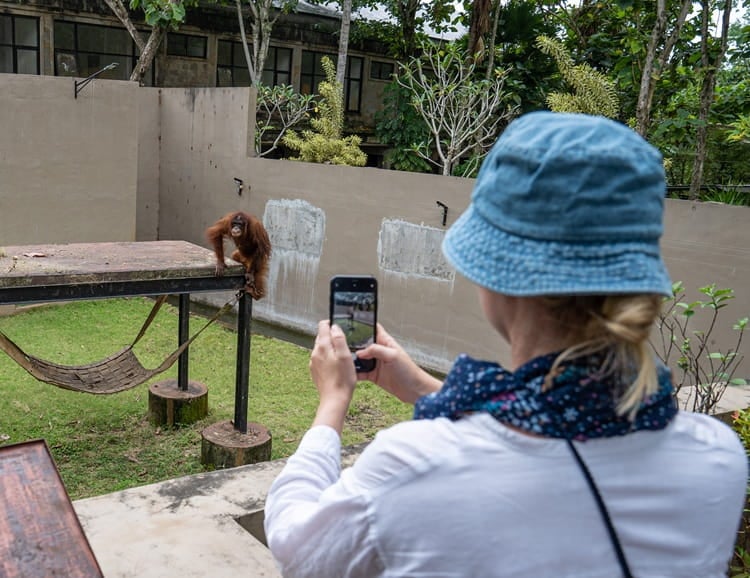
When Nico, Jeni and Joni were baby orangutans, they were used as photo props for tourists. Visitors paid to hold them and take pictures.
As they grew older and stronger, those interactions stopped. Instead of being given a better life, they were locked away.
Today, they spend long hours confined to concrete cells or barren enclosures. They beg for food. They show signs of deep frustration and distress. This is not what an orangutan’s life should look like.
In the wild, orangutans live in complex forest habitats across Borneo and Sumatra. They are intelligent, gentle animals who need space, trees and stimulation to survive.
Nico’s story
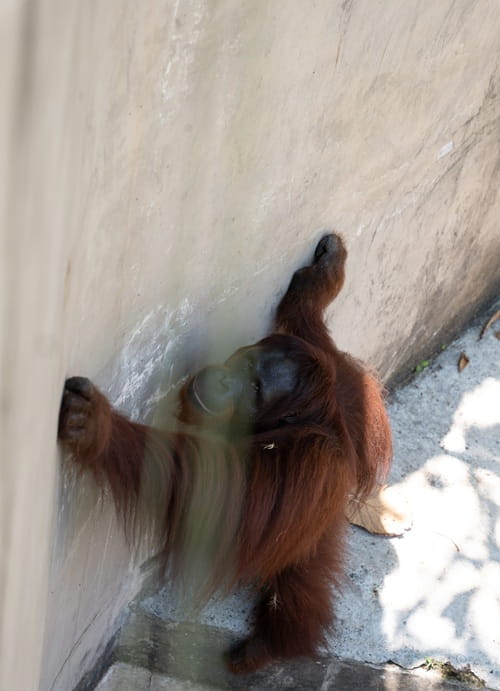
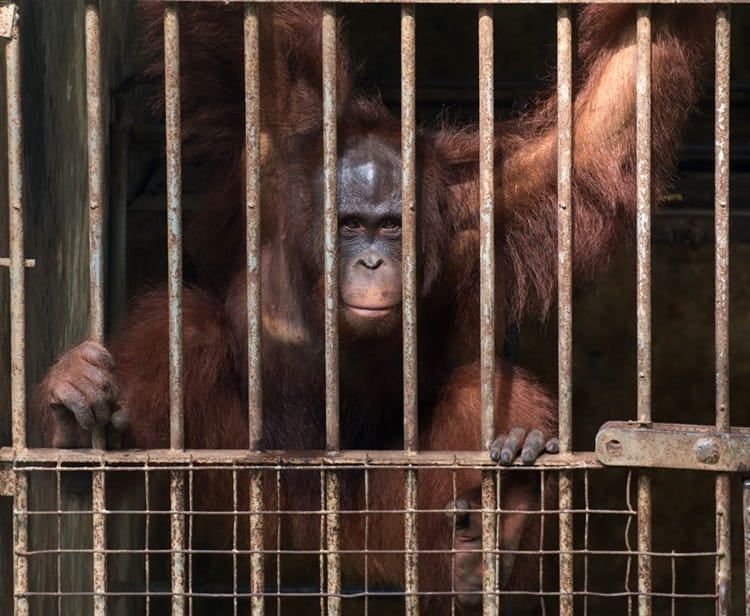
Nico is around 20 years old. As a young orangutan, he was used for close encounters and photo experiences at Bakas Adventure Park in Bali. As he grew older, captivity took its toll.
Nico now spends most of his days confined to a small, barren concrete cell. When our team observed him on a visit, he was very thin and in poor physical condition. His fur was matted, brittle and dull. He showed clear signs of depression, boredom and frustration. No orangutan should live like this.
Jeni and Joni’s story
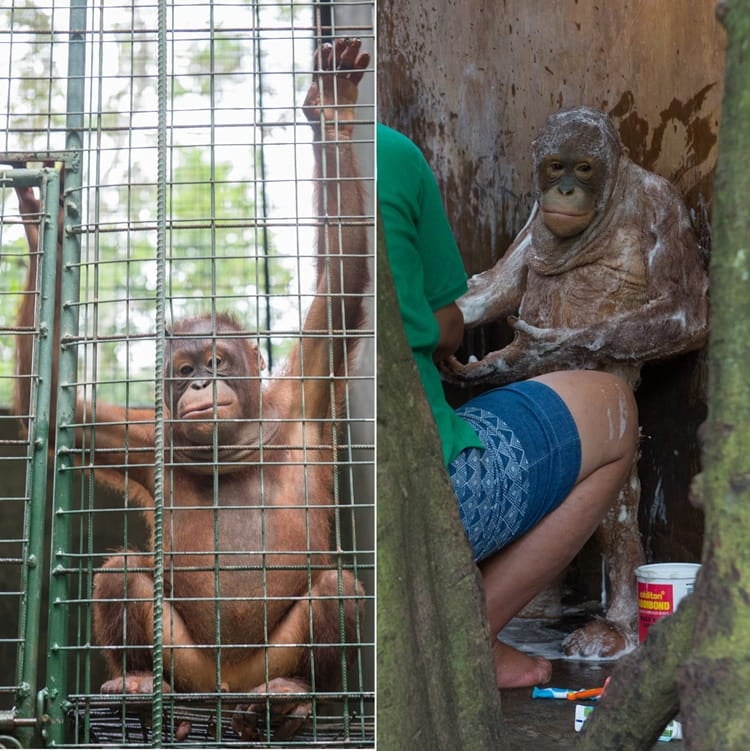
Jeni and Joni are siblings, around 13 to 14 years old, and have been in captivity since they were baby orangutans.
During our first visit nearly a decade ago, they were kept in concrete cells and brought out for photos with visitors. As they grew older, those interactions ended.
Now, they spend most of their days locked in concrete cells or a barren enclosure, with little stimulation.
Staff at the venue told us that during the COVID‑19 pandemic, Jeni cried for food because she was hungry. Tragically, she has now learned to beg for food.
We have seen Jeni repeatedly vomit and re‑eat her food. This is a deeply confronting behaviour and may be a sign of severe stress in captive orangutans.
A life of suffering at Bakas Adventure Park in Bali
Our investigations over the last decade found these orangutans can spend up to 21 hours a day locked in small, dark concrete cells behind the single, barren enclosure. On one visit, Nico had been confined in a dark cell for 46 hours straight.
At the venue, our team also witnessed filthy cages, open sores on animals, and enclosures with no enrichment. This level of deprivation causes immense physical and psychological harm.
How you can help free these orangutans
With your support, we have been advocating for Nico, Jenni and Jonni to be surrendered to a sanctuary for many years.
We have found a safe orangutan sanctuary in Indonesia that may be able to care for them for the rest of their lives. A place where they can finally experience peace, enrichment and relative freedom.
But we cannot do this without you.
Indonesia recently announced a world-leading national phase-out of elephant riding. And the Indonesian Government has taken strong steps to ensure this is enforced.
We are respectfully asking the Government to take an equally strong step and use its power to make a change for Nico, Jeni, and Joni.
Please share their story on social media to amplify our message to the Government.
Together, we can give Nico, Jeni, and Joni the life they deserve. A life worth living.
Share on Facebook
Please share their story on Facebook to amplify our message to the Indonesian Government.
Share on X
Please use your voice on X and help call on the Indonesian Government to surrender Nico, Jeni and Joni to a sanctuary.
FAQs
How will sharing Nico, Jeni, and Joni’s story on social media help them?
Sharing Nico, Jeni and Joni’s story will help build public pressure to move these orangutangs to a sanctuary.
The Indonesian Government needs to approve this move as it owns the orangutans and placed them at the Park.
Indonesia recently announced a world-leading national phase-out of elephant riding. And the Indonesian Government has taken strong steps to ensure this is enforced. We respectfully ask the Government to take an equally strong step and use its power to make a change for Nico, Jeni and Joni.
When enough people speak up, venues and governments are more likely to act. By sharing their story, you can help create the pressure needed to free these three orangutans.
Why is it cruel to keep orangutans in captivity?
Orangutans suffer deeply in captivity because they are intelligent, emotional animals with huge space needs. In the wild, orangutans spend their days climbing, foraging and making choices. Being confined to cages for long periods causes stress, frustration and abnormal behaviours. This is why captivity causes severe welfare issues for orangutans like Nico, Jeni and Joni.
Are wildlife photo opportunities harmful to orangutans?
Yes. If you can touch, hold, or take a selfie with a wild animal, it is cruel. Orangutans used for photos are taken as babies, separated from their mothers, and trained for human contact. When they grow older and are harder to control, they are often confined and neglected instead of protected.
Why do orangutans need space and enrichment?
Orangutans naturally have large home ranges and spend most of their lives in trees. Their natural orangutan habitat includes complex forests that provide food, shelter and mental stimulation. Small cages and barren enclosures deny them movement, choice and enrichment, leading to long‑term physical and psychological harm.
Can orangutans recover after years in captivity?
With the right care, many orangutans can recover physically and emotionally after captivity. An orangutan sanctuary could provide the space, proper nutrition, enrichment and veterinary care they need. Sanctuaries allow rescued orangutans to climb, forage and live with dignity, even if they cannot return to the wild.
How can travellers help protect orangutans?
Travellers have real power to end cruelty by refusing to support wildlife entertainment venues. Avoid buying tickets to places that offer animal selfies, performances or close encounters. Choose ethical tourism instead and help keep wild animals, including orangutans, where they belong.
Animals, not entertainers.
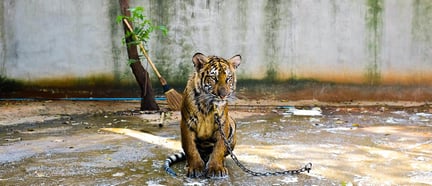
Animals are sentient beings who can feel complex emotions like happiness, fear, and pain, to name a few. Like us, they too deserve to be happy and free in their homes – the wild.
Support us
Your support is key to bringing an end to animal suffering across the world.