Bred to Entertain report
Read our 2026 assessment capturing 15 years of Thailand’s elephant tourism industry to find out more.
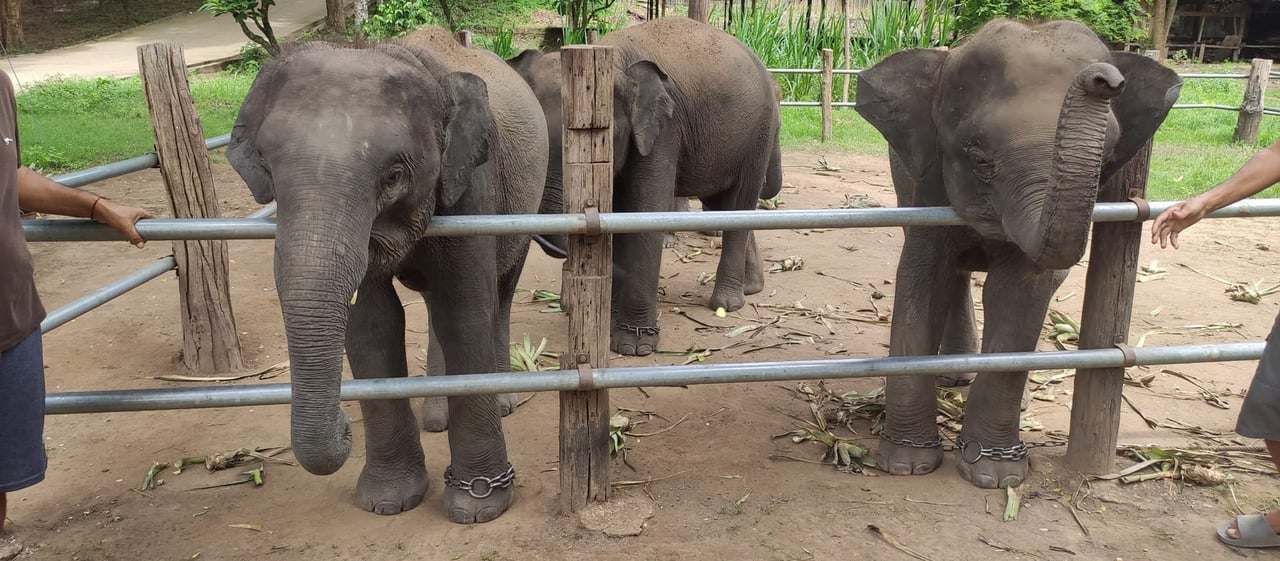
Our 2026 ‘Bred to Entertain’ report capturing 15 years of Thailand’s elephant tourism industry, reveals that elephants used in tourism continue to suffer at entertainment venues, with two out of three living in poor conditions.
Read our 2026 assessment capturing 15 years of Thailand’s elephant tourism industry to find out more.
Yet within this situation of clear and continuing cruelty, our researchers also found some small improvements since the last study in 2019.
Fewer elephants are used for riding and performances and there has been a slight increase in observational only activities.
The researchers, led by our renowned elephant expert and wildlife veterinarian Dr Jan Schmidt-Burbach covered 236 venues holding 2,849 elephants from February 2024 to January 2025.
“In our report we are no way giving the impression that the third of elephants kept in higher scoring venues are kept in perfect conditions. Captivity is not an adequate situation for elephants – even conditions at elephant-friendly venues aren’t perfect.”
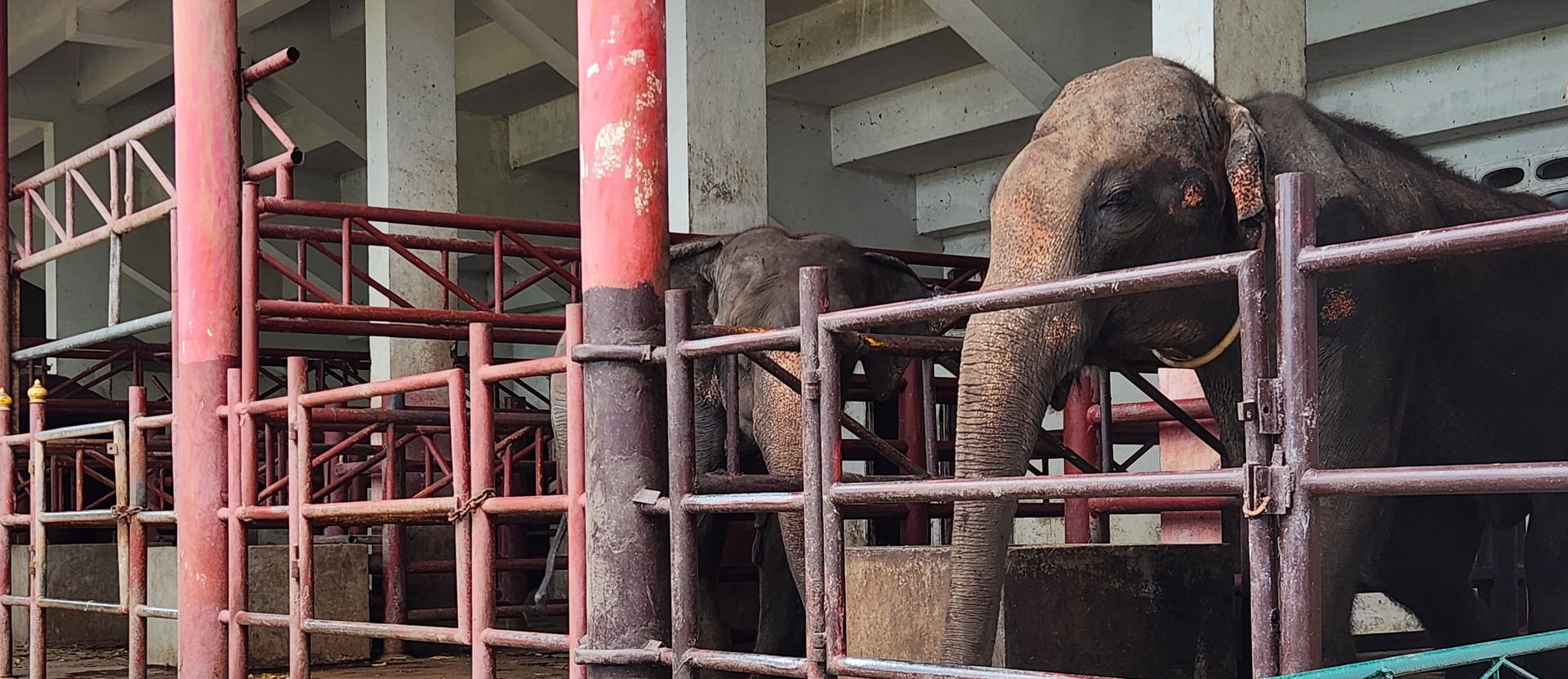
Positively, the research identified a consistent decline in elephant ride availability. During 2010, 92% of all elephants were used for rides; this decreased to 43% by 2024.
“While impressive, this drop needs to be put into perspective as the overall number of captive elephants in tourism has increased by more than 70% in the same timeframe. So, the actual number of elephants used for rides has only decreased by 20% (from 1,519 elephants in 2010 to 1,217 elephants in 2024),” explained Dr Schmidt-Burbach.
Thanks to your support, World Animal Protection has long documented elephant rides and shows as inflicting great stress and suffering on the animals. This cruelty occurs both through the rides themselves and through the way the animals are trained and kept.
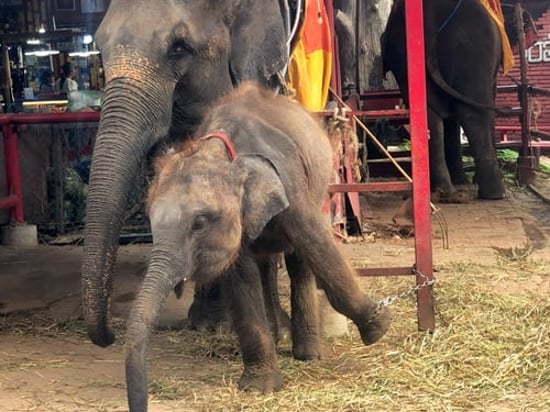
While the elephants used for riding may look peaceful, most will have been taken from their mothers as babies, forced to endure harsh training and suffer poor living conditions throughout their life.

In the wild they would be living in large herds, constantly interacting with each other, and building life-long ties, while roaming long distances and browsing a large range of plants and fruits. In captivity they usually have very few opportunities to interact with other elephants and are offered a limited variety of food. Their ability to move about by their own choice is also restricted. An intelligent animal like an elephant is psychologically affected by this.
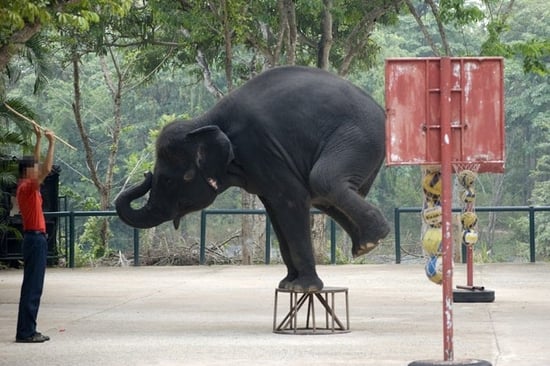
Researchers also found fewer elephants used for show performances. Shows can involve elephants playing football, painting, and performing balancing acts. Because such behaviours do not come naturally fear of pain, control and bribery are used to force elephants to perform.
“In 2010, half of all captive elephants were housed at venues offering shows, compared with only 21% in 2024,” said Dr Schmidt-Burbach. He points out that this is proportionally less than in previous surveys (42% in 2019, 44% in 2015, 53% in 2010).
“While this proportional decrease is encouraging, some particularly popular venues have massively invested in their elephant shows. For example, Nong Nooch Tropical Garden, a venue near Pattaya, has constructed a stadium that can hold 2,000 visitors and is used four times a day for shows in which up to two dozen elephants are forced to participate.”
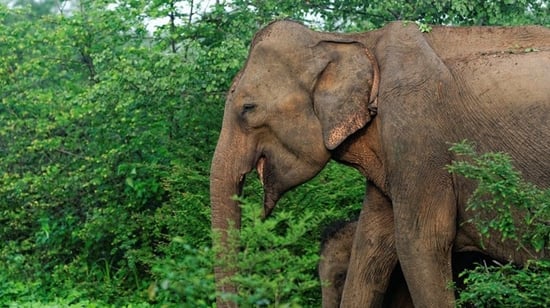
Did you know that elephants can live up to 70 years in the wild, however their lifespan in captivity is generally shorter?
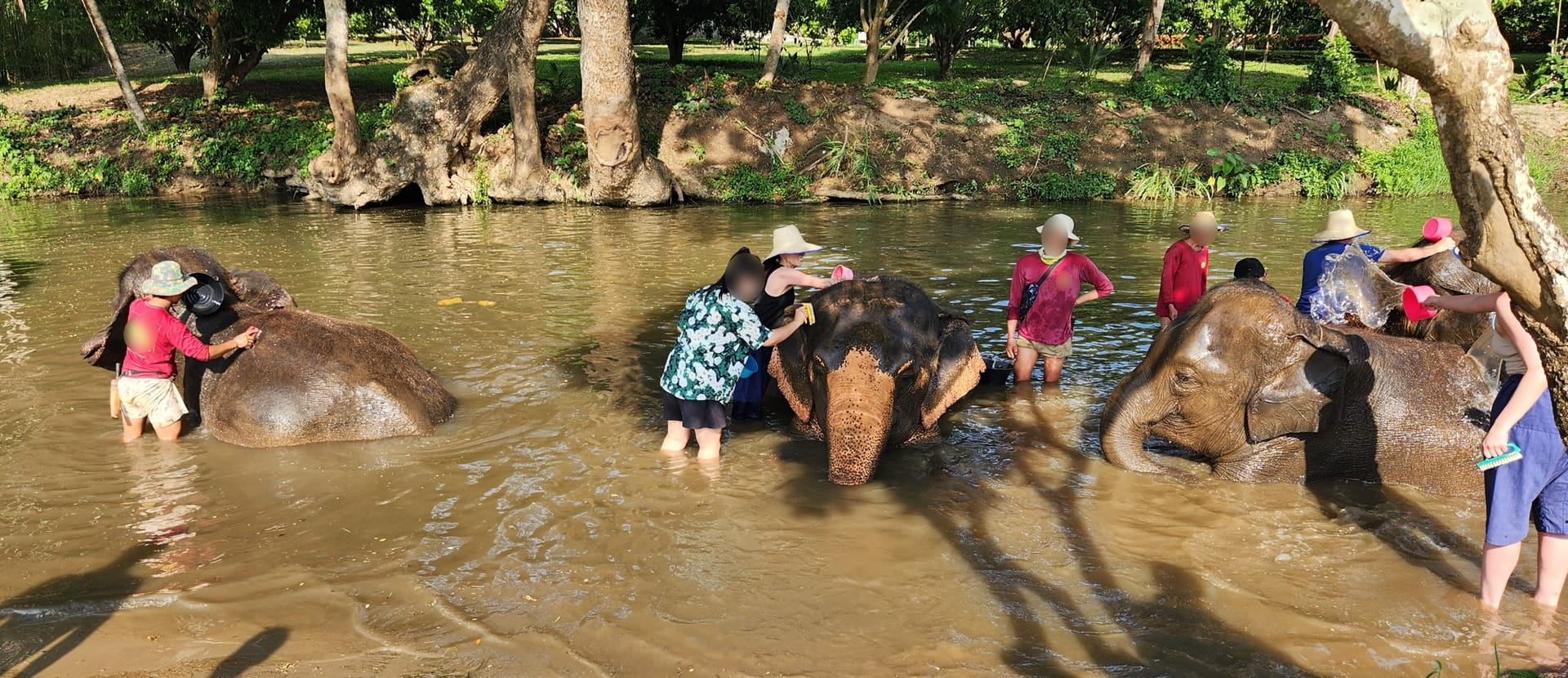
In 2024, half of all elephants (54%) were kept at venues that offered either washing or care-taking activities. These venues very often promote themselves as sanctuaries, rescue centres, or refuges, so such claims mislead tourists into thinking they are participating in something ethical and helpful to elephants.
In captive environments where elephants have free access to water, mud baths and sand pits, the animals do not require tourists to wash them.
“If given a choice, captive elephants will avoid close contact with unfamiliar people. At washing venues, they don’t have that choice. Their compliance is achieved through a mix of associating the presence of visitors with food, through punishment if an elephant doesn’t comply, and through the regularity of those interactions.”
The danger elephants pose to people in these washing and “care” experiences is hidden from tourists by the venues.
“There have been frequent incidents where elephants have injured visitors – either by accident or because their patience was pushed beyond their limits. In such events, the elephants will be punished. And sometimes, the mahouts – their handlers – are often made scapegoats and will face legal action for not controlling their elephant sufficiently,” said Dr Schmidt-Burbach.
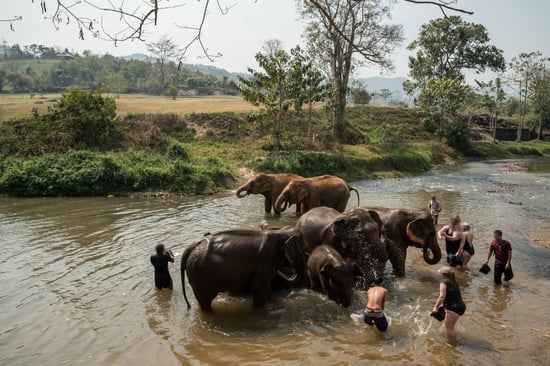
Find out more about why elephant bathing is just as cruel as riding.
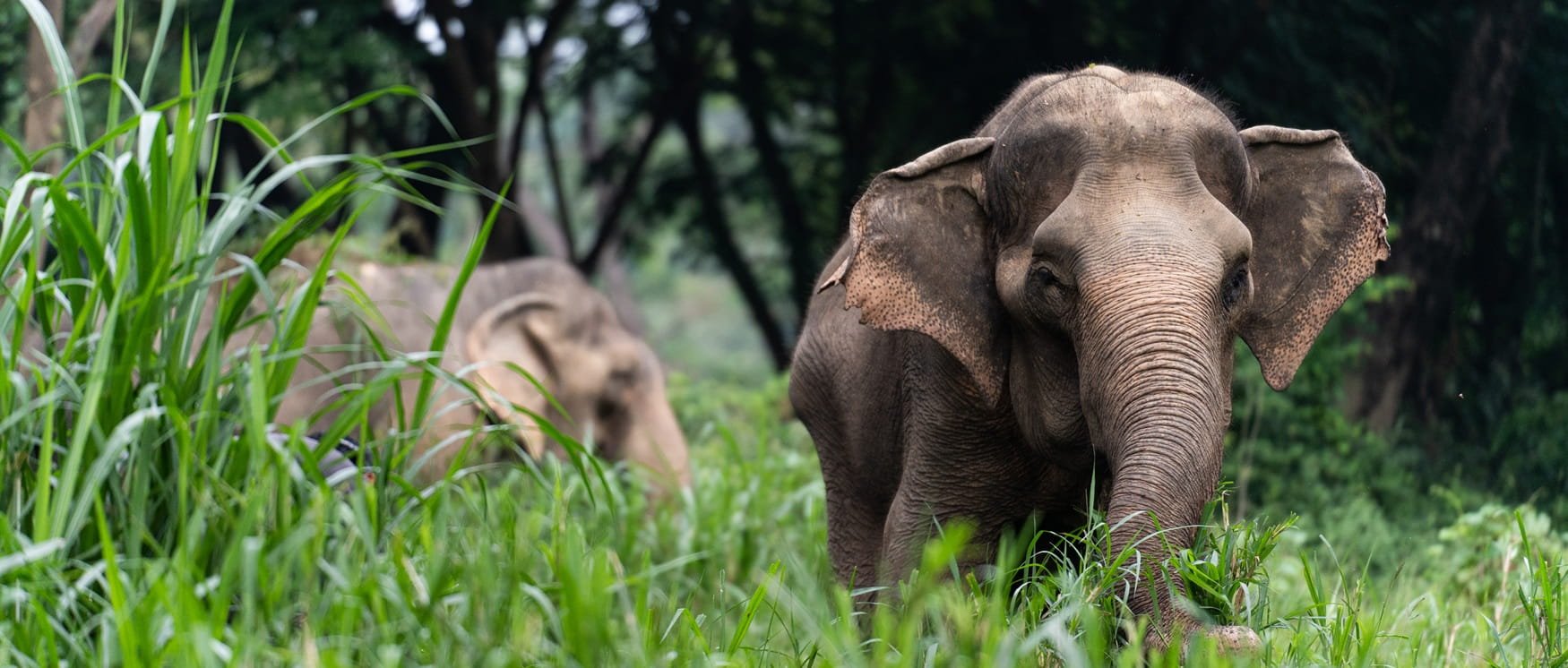
In 2010, only 4.6% of all elephants (75 animals) were kept at venues offering observational experiences. In 2024, we documented 7.3% of all elephants (207 animals) at venues offering observation – almost three times as many elephants as in 2010.
“In many instances, venues offering purely observational experiences have received the highest welfare condition scores in our research as they also adopted best practice elephant management routines. But just because a venue offers observational experiences, better welfare for the animals is not guaranteed,” says Jan.
He explains that in truly high quality, spacious observation-only venues, elephants are encouraged and enabled to maximise their environment autonomously and to forage and explore. “They will also have opportunities for socialising with other elephants, and their mahouts will be skilled in managing elephants humanely.”
Together, we can give every elephant a life worth living.
Read our 2026 assessment capturing 15 years of Thailand’s elephant tourism industry to find out more.
To be a wildlife-friendly traveller, make sure you prioritise activities with high animal welfare.
Choose to see elephants in the wild if possible, as this has the least impact on wildlife. Kui Buri, Khao Yai and Khao Sok National Parks will give you the best chance to see elephants in their wild home. Alternatively our Living In the Forest with Elephants (LIFE) Wildlife Heritage Area provides a designated protected areas that protect animals like elephants, the environment, and local communities through ethical tourism.
If choosing to see elephants at a venue or sanctuary, research authentic experiences and venues that provide great care for them and prioritise elephant welfare. You should see elephants from a distance that is safe for both you and the animals. Read more in our Elephant Friendly Tourist Guide.
Book with travel companies that have taken the Wildlife-Friendly Pledge, and avoid ones that have not.
World Animal Protection has worked in Thailand since 2017 to encourage venues to transition to high-welfare environments. So far thirteen venues have made the change, becoming leading examples to others. And through our campaigning more than two hundred travel companies globally have committed to wildlife-friendly policies – they no longer sell exploitative elephant and other wild animal experiences.
Yet many others continue to sell elephant rides or promote washing and hand feeding interactions. Their misleading marketing enables harmful practices to persist, says Chokdee Smithkittipol co-author of the report and campaigner from our Thailand office team.
He explained that the travel industry is the critical link between travellers and elephant venues. Every experience offered and every venue promoted directly influences whether elephants are exploited or protected.
“Online booking platforms are particularly responsible for sustaining demand for exploitative attractions," says Chokdee.
The Thailand team are working hard to convince the travel industry and Thailand’s government to better protect the country’s elephants. It is also vital to stop the country’s elephant breeding pipeline fuelling the tourist industry.
“Thailand’s legal framework regarding captive elephants remains outdated and fragmented. Wild elephants are strictly protected, while captive elephants are still classified as livestock under laws dating back to 1939. This dual system creates loopholes, permits unchecked breeding, and leaves captive elephants with minimal welfare safeguards,” he explains.
“We want a strong elephant-specific legal framework and welfare standards that protect our elephants – Thailand’s national symbol – from commercial exploitation. The commercial breeding of captive elephants must end too. And we are pressing for a phase out of tourist activities involving inhumane practices such as shows or rides.”
Other measures our Thailand team are working for include the following:
Promotion by travel companies and Thailand’s tourism authority of genuine observation only venues and for them to exclude all close-contact elephant-human interaction tourism
Support – financial, technical, and marketing – from both the travel industry and the government to help local businesses and people move away from the exploitative practices of elephant tourism.
Strengthening the Elephant Venues Network Which World Animal Protection established in 2023. This important network of fifteen elephant-friendly venues is a forum to share knowledge, skills, and experience to improve elephant welfare. It also allows venues to share their experiences and successes in developing an ethical and sustainable elephant-friendly business model. Our aim is for the examples of businesses in the network to inspire others to make the transition to elephant friendliness.
All 236 venues across Thailand were visited in person and scored by researchers trained in the methodology. They were visited at least once, sometimes repeatedly, to document the situation. “Our mission was to ensure an objective assessment not reliant on hearsay or anecdotal evidence,” explains Jan.
In most cases, the visits were conducted unannounced and for each venue, researchers collected a range of information. This included everything that researchers were able to observe or extract through casual conversations and interviews with staff. They also took photographs and videos to document the findings.
“We found that more than half of all elephants were kept on short chains during the day with little or no opportunity for natural social interaction. Only a quarter could interact freely with peers while not chained. Spending long periods of time on concrete standing grounds and noisy environments remains a frequent concern for the many elephants in tourism venues,” says Jan.
Other concerns were that daily hygiene was often controlled by humans, rather than allowing elephants the natural and autonomous access to bathing or dusting they need.
Read our 2026 assessment capturing 15 years of Thailand’s elephant tourism industry to find out more.
Find out more about why elephant bathing is just as cruel as riding.
Will you donate to protect elephants from the clutches of tourism?